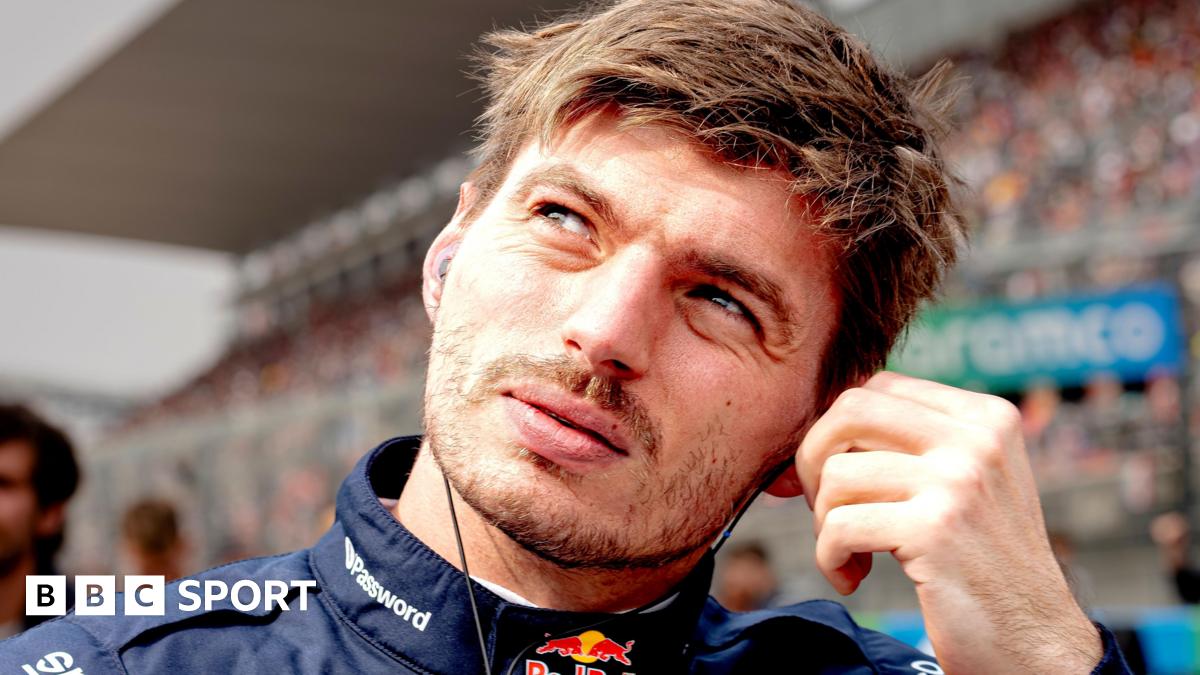
Max Verstappen said after the Japanese Grand Prix that he was considering quitting Formula 1 – and then said that the bosses of the sport “know what to do” to keep him in it.
Verstappen’s issue is with the new rules. He has been clear all year that the new form of driving and racing the new hybrid engines have created is not to his taste. And he repeated that opinion after the race in Suzuka, as well as before it.
The four-time champion said he was “not enjoying the whole formula behind it, it doesn’t feel natural to a racing driver”.
He added: “Of course I try to adapt to it, but it’s not nice the way you have to race. It’s really anti-driving. Then at one point, yeah, it’s just not what I want to do.”
Verstappen made it clear in the interview with BBC Sport in which he made his powerful remarks that his opinion was not based on his lack of competitiveness this season as his Red Bull team struggle.
That will be bad news for Red Bull team principal Laurent Mekies, who said that he and Verstappen were “focusing on the competitive picture” and “having zero discussions about the other aspects”.
Mekies added: “I’m sure by the time we give him a fast car, he will be a much happier Max. And by the time we give him a car he can push and make the difference with, he will also be a happier Max.”
Verstappen is the most outspoken of the drivers about the new rules, but he is far from the only one unhappy. Most of the drivers have misgivings on one level or another.
Before Japan, the general consensus among F1 bosses seemed to be that the new power-units and their 50-50 split between internal combustion and electrical power, and consequent focus on energy management, had had a beneficial impact on racing.
But it was accepted that they had had a detrimental effect on qualifying – where the drivers have almost universally complained that energy recovery was diminishing the challenge of some of the sport’s fastest corners by lowering the speeds they take through them because of the need to recover energy.
However, the Japanese race highlighted a problem about which drivers have been warning in racing, too.
Haas’ Oliver Bearman had a frightening high-speed crash at Spoon Curve, caused by a 50km/h speed differential between his car and that of Franco Colapinto’s Alpine.