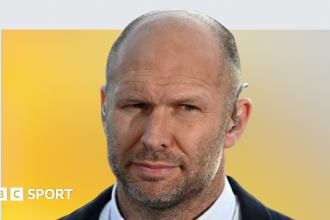
Maksims Krivunecs starts with a disclaimer – he is not the biggest fan of cross-border leagues, although he is the man trying to pioneer one.
“I feel it is a necessity,” says Krivunecs, president of Latvia’s top-flight Virsliga, who is proposing a ‘Baltic League’ he hopes would also include Estonia and Lithuania.
Independent analysis has backed up Krivunecs’ “quite worrying” evaluation that the Virsliga is struggling to keep pace with Europe’s top 30 leagues.
“The domestic broadcasting deal is the main fuel for any league in the world to develop clubs, the league and the interest for the competition and unfortunately we have zero broadcasting deal,” he says.
“We’re very limited with resources. We don’t have a big sponsorship market.”
With Latvian football also competing with ice hockey and basketball for fans’ attention, clubs largely rely on savvy transfers and passionate investors – which is why many have only been formed or reformed in the past 10 to 15 years.
“In this kind of environment you cannot even plan ahead for multiple years,” says Krivunecs. “Because if something happens with the investors’ main business, the first thing to disappear is support to the clubs.
“We all want to build clubs with communities, that have a heritage, history, because that’s how you make the product.”
Krivunecs has had to be innovative in trying to develop that “product” and generate interest – fantasy football, statistics, quizzes, predictions, full licensing on Football Manager. He has looked into streaming games on YouTube and collaborating with influencers on Twitch and TikTok.
But his biggest play is the cross-border Baltic League – one he believes would generate revenue, develop players and help clubs grow on the European circuit.
It is not a completely original prospect, there have been iterations before including between 2007 and 2011, but not in this format.
“The cross-border would allow us to create more competitive games,” says Krivunecs, highlighting the difference in strength between the top and bottom Virsliga clubs. Indeed, RFS beat Ajax in the Europa League last year.
“We created the roadmap – a common structure, common product, common distribution and marketing.”