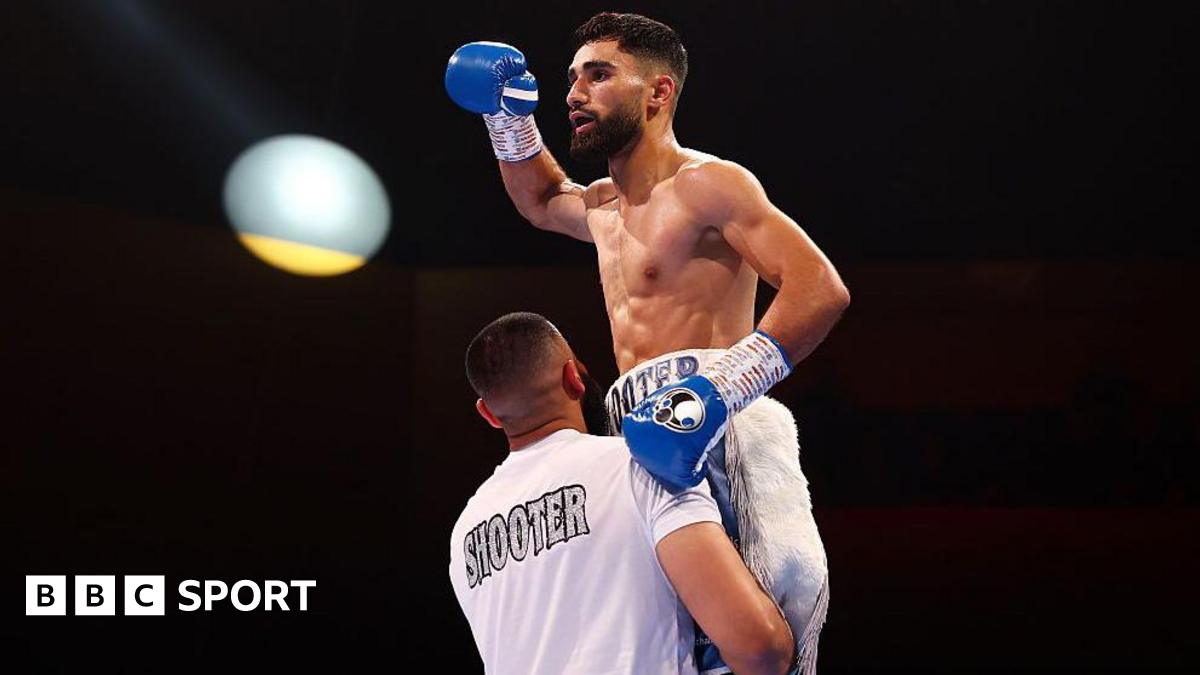
Talent, belief and dedication can take a fighter far but making smart decisions early on will determine the height of Ishaq’s ceiling.
Iqbal describes the transition from amateur to professional as a “delicate” stage, where careers are often made or broken.
“The first five or six fights are the real transition,” he says. “The work Hassan does in the gym now – and with the sparring partners we bring in – is more important than later.
“As you get older, your muscles become cemented. It’s harder to change.”
Crucially, Iqbal believes the trainer must be involved when it comes to match-making, making sure opponents aid development rather than simply pad a record.
“Boxing is a messed-up sport. Sometimes managers who have never boxed find opponents,” he says.
“But it should be the coach, because the coach knows the fighter’s strengths and weaknesses.”
Even the sport’s greats needed learning nights. Pacquiao’s first three bouts went to points. In his second pro fight, Floyd Mayweather went the four-round distance with awkward southpaw Reggie Sanders and had to deal with a cut in the third.
“We want opponents who make Hassan show what he can do. Who can test his grit and take his power. Hassan can box with both hands and we want someone who throws something back so he can slip, counter and whack.” Iqbal adds.
“We have to remember he’s only 22 but if he continues to keep pushing and learning, he will go all the way.”