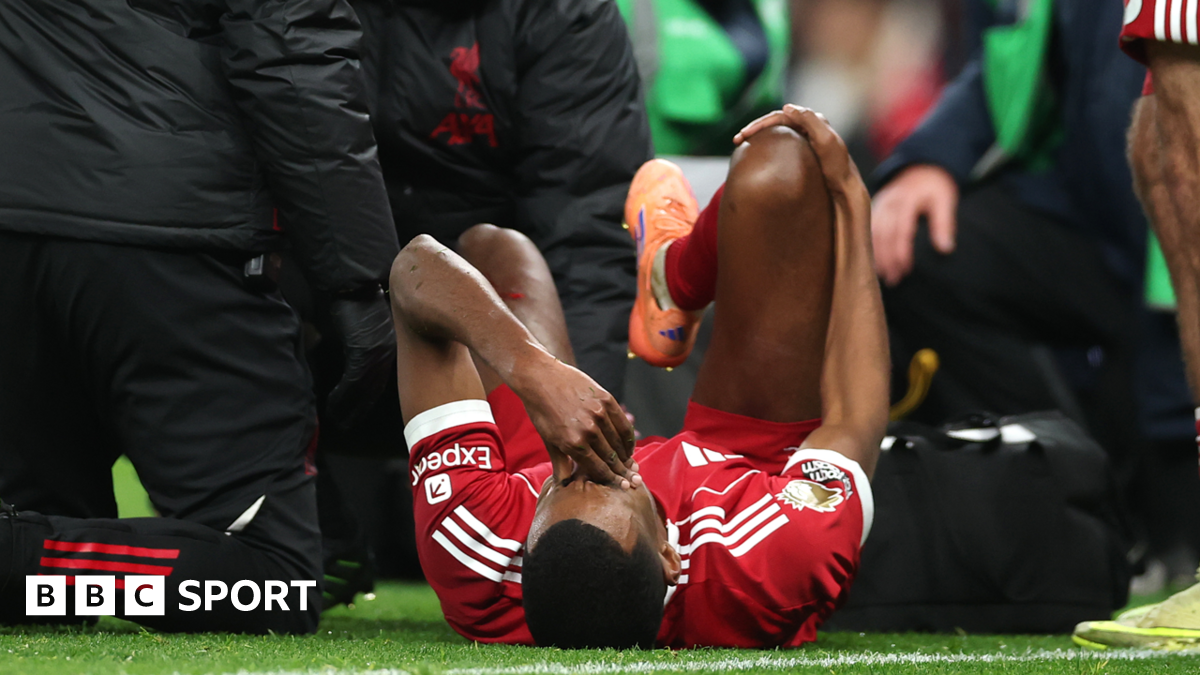
The simple answer when comparing a leg break to any other injury is that it depends which bone has been broken, and how badly.
The most common leg fractures in football occur in the lower leg bones – the tibia and fibula.
Fibular fractions are among the quickest forms of leg break to heal, as the fibula are the smaller of the two lower leg bones that form the outer part of the shin and are not weight-bearing. These fractures can heal relatively quickly, often in around six to eight weeks.
The tibula is the more substantial shin bone of the lower leg pair, and can take three to four months to heal from a fracture.
In much rarer occasions, the femur – thigh bone – can be fractured in a footballing injury. It is far stronger than the tibia and fibula, and is also less likely to be impacted during a game, which is why thigh bone fractures for footballers are not as common compared to lower leg breaks. These can also take three to four months to heal.
“It all depends on the level of severity,” sports physiotherapist Nick Worth told BBC Sport.
“If it’s a straightforward fibular fracture from a kick to the outside of his leg, he could be back playing within six weeks.”
However he said anything involving the tibia could result in Isak being sidelined for “three to four months if treated conservatively”.
“The severity will dictate whether there’s a need for any surgery, or pins and plates. That would add on time, because they are trying to make the fracture stable and strong.”
Adding metal pins and plates to the bone means that players can get started on rehabilitation more quickly, as their fracture has been stabilised.