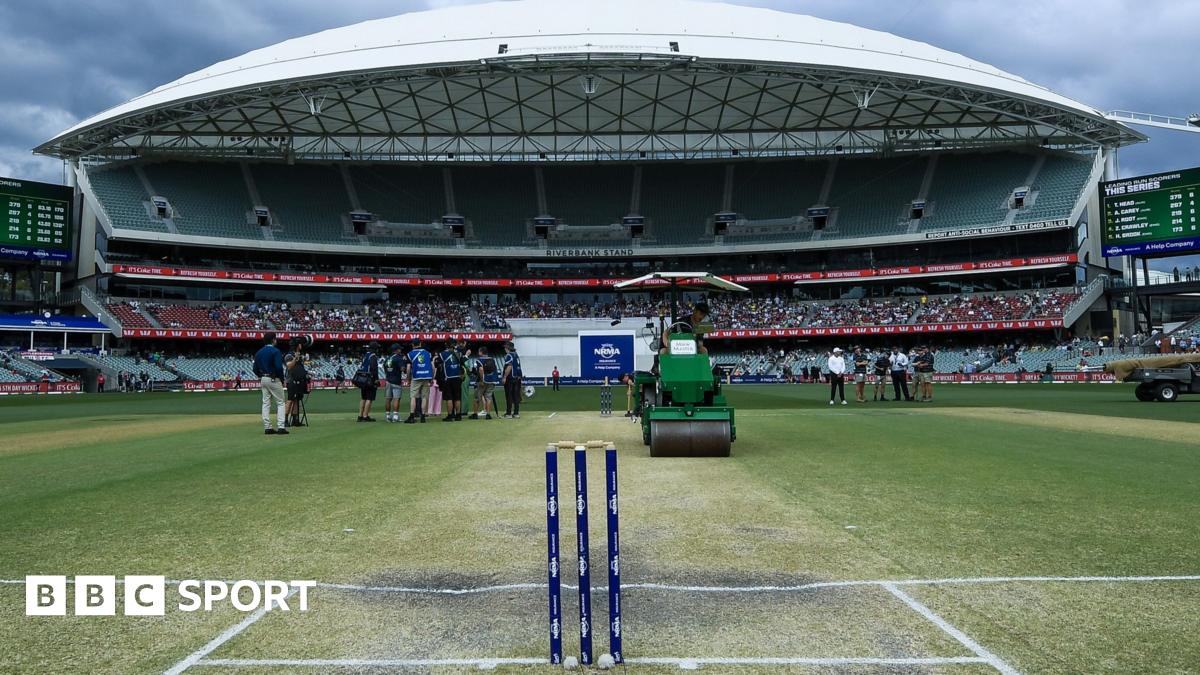
Throughout the Test you may have heard players and commentators talking about the “10mm of grass” left on by Melbourne Cricket Ground curator Matt Page.
But why is that so significant?
Typically in Test cricket, the grounds team in charge of preparing the 22-yard strip will leave a small amount of grass on the surface, which offers help to the seam bowlers before the pitch begins to settle down for the batters – hence why people talk about the first hour of play being crucial when a team bat first.
Grass makes such a difference because of the way it interacts with the ball.
The red cricket ball, which has a pronounced seam running through the middle of its exterior, hits the grass and can move sideways, making it trickier for the batter to combat and bringing slip fielders into play.
More grass means more pronounced movement but also consistent bounce and carry.
Once the grass dies, the pitch begins to break up and that leads to inconsistent bounce and the potential for the ball to spin off the surface.
A combination of play, the weather and the use of rollers throughout the match kills the grass and leads to the natural break-up of the surface.
The intense heat and different soil structures in places like India, Pakistan and Sri Lanka often mean pitches there break up faster and are more spin-friendly.
Temperatures in Melbourne are expected to reach 33C on Monday – what would have been the fourth day of the Test – and the long-range forecast may have contributed to Page leaving extra grass on the pitch.
He left 7mm of grass on the surface for last year’s Test against India, which was won after tea on the fifth day – the kind of match many cricket fans like to see.
This article is the latest from BBC Sport’s Ask Me Anything team.